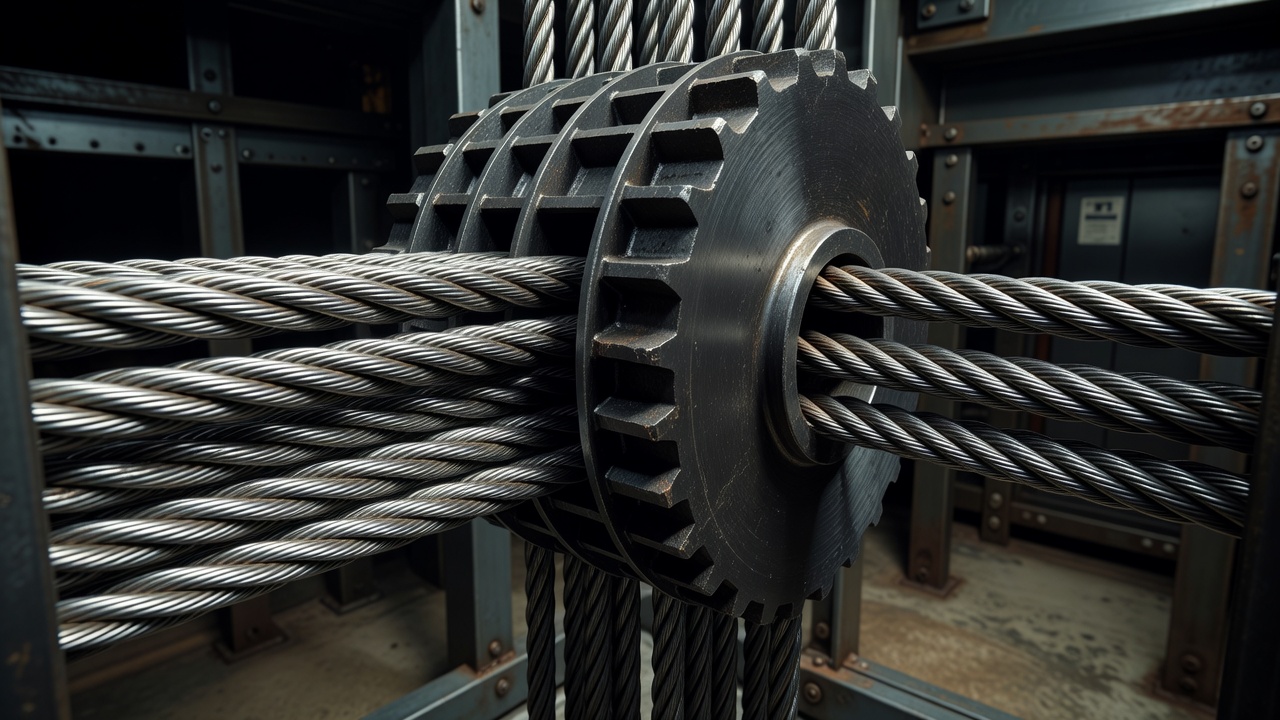
Traction elevators are the workhorses of the modern skyline. Unlike hydraulic systems that push a cab from below using pressurized fluid, traction systems pull the cab using a combination of steel cables (or synthetic ropes), a motorized drive sheave, and a precisely calibrated counterweight. This mechanism relies on the fundamental physics of friction—or "traction"—between the ropes and the grooved sheave to move passengers efficiently over vast vertical distances.
Geared vs. Gearless Systems
Traction technology is broadly divided into two categories based on how the electric motor connects to the drive sheave.
Geared Traction
In geared machines, an electric motor drives a worm-and-gear-type reduction unit, which in turn turns the hoisting sheave. This mechanical reduction allows a smaller, higher-speed motor to generate the massive torque required to lift a heavy elevator cab. Geared systems typically operate at speeds ranging from 1.7 to 2.5 meters per second (350 to 500 feet per minute). While highly reliable and cheaper to install than gearless variants, the friction introduced by the gearbox limits their maximum speed and slightly reduces overall mechanical efficiency.
Gearless Traction
Gearless machines remove the reduction gear entirely. The drive sheave is attached directly to the motor shaft. To generate the necessary torque without a gearbox, these systems use large, low-speed, high-torque electric motors (often synchronous AC motors with permanent magnets). Because there is no mechanical loss from a gearbox, gearless systems are incredibly smooth, highly energy-efficient, and capable of extreme speeds—often exceeding 10 meters per second (2,000 feet per minute). They are the exclusive choice for ultra-high-rise skyscrapers.
The Physics of Counterweights
The efficiency of a traction elevator hinges on its counterweight. A counterweight is typically sized to equal the weight of the empty elevator cab plus 40% to 50% of its maximum rated passenger load.
By balancing the system in this way, the electric motor does not have to lift the entire weight of the cab and passengers. Instead, it only needs to overcome friction and lift the net difference in weight between the loaded cab and the counterweight. For instance, if an elevator is loaded to 50% capacity, the system is perfectly balanced, and the motor expends minimal energy to move the cab up or down.
Regenerative Drives
One of the most significant advancements in modern traction systems is the implementation of regenerative drives. Because the system is counterweighted, there are times when gravity does the work. When a heavily loaded cab descends (heavier than the counterweight), or a lightly loaded cab ascends (lighter than the counterweight), the motor acts as a generator to brake the elevator.
Older systems dissipated this generated electricity as waste heat using large resistor banks. Modern regenerative drives capture this energy and feed it back into the building's electrical grid, where it can be used to power lights, HVAC systems, or other building equipment. This technology can reduce total elevator energy consumption by 30% to 40% in busy commercial buildings.
Comparison Summary
| Feature | Geared Traction | Gearless Traction |
|---|---|---|
| Max Speed | Up to 2.5 m/s | Up to 10+ m/s |
| Max Travel Height | Up to 90 meters | Over 600 meters |
| Energy Efficiency | Moderate | Very High (especially w/ regen) |
| Initial Cost | Lower | Higher |
| Ideal Use Case | Mid-rise commercial (5-15 floors) | High-rise skyscrapers (15+ floors) |
Maintenance Considerations
Maintaining a traction elevator requires specialized expertise. The critical components subject to wear include the wire ropes (which stretch over time and require periodic tensioning or replacement), the grooves in the drive sheave (which can wear down and reduce traction), and the motor bearings. Furthermore, geared systems require regular gear oil analysis and replacement to prevent premature wear of the bronze worm gear.
With proper maintenance adherence per ASME A17.1 protocols, a heavy-duty traction machine can provide 20 to 30 years of reliable service before requiring a major modernization.