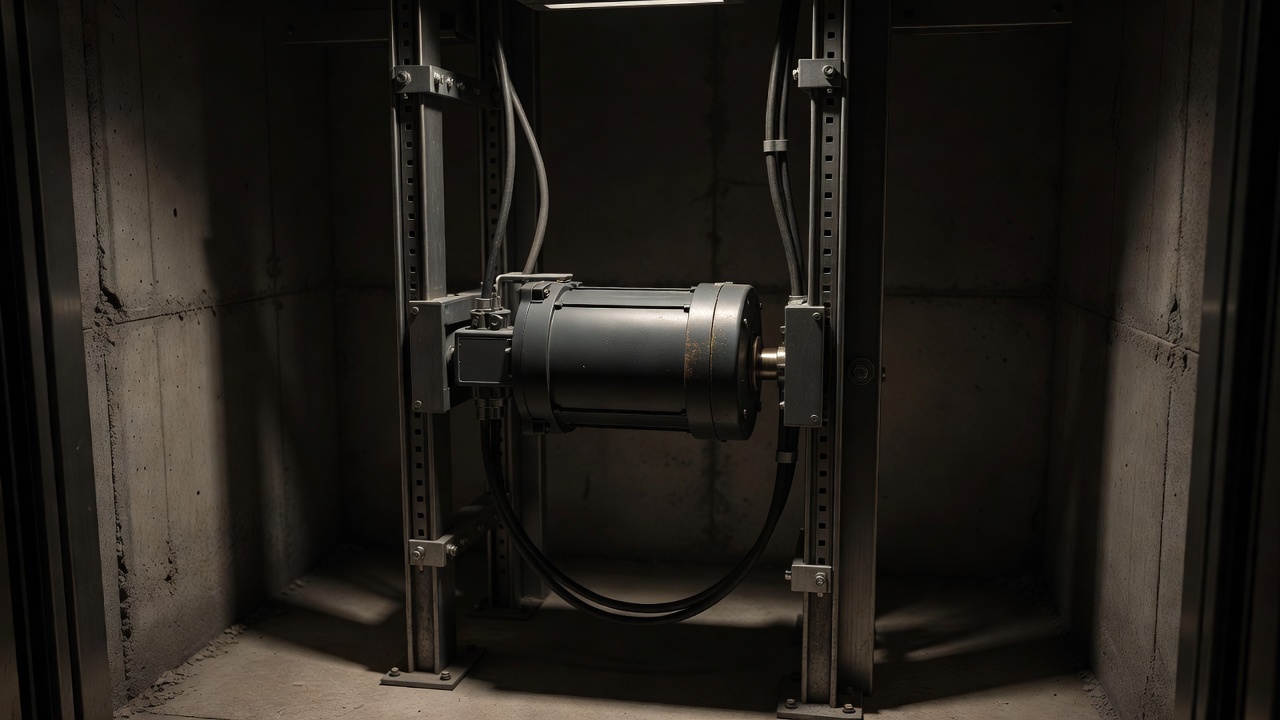
Introduced to the market in the mid-1990s, the Machine Room-Less (MRL) elevator represents one of the most significant architectural advancements in vertical transportation history. By miniaturizing the hoisting machine and moving it directly into the elevator shaft (hoistway), MRL technology entirely eliminates the need for a dedicated rooftop machine room. This single innovation transformed commercial real estate development by freeing up lucrative rooftop space and streamlining roofline aesthetics.
How MRL Technology Works
The core of an MRL system is a highly compact, gearless, permanent-magnet synchronous motor (PMSM). Because PMSMs are significantly smaller and more power-dense than traditional induction motors, they can be mounted securely to the elevator guide rails at the top or bottom of the hoistway.
Instead of traditional thick steel wire ropes, many modern MRL systems utilize flat, polyurethane-coated steel belts. These belts are significantly more flexible than wire rope, allowing the drive sheave to be drastically reduced in diameter—often to just a few inches. A smaller sheave requires less torque to turn, which in turn allows for a smaller electric motor, enabling the entire package to squeeze between the elevator cab and the hoistway wall.
Architectural and Economic Advantages
For architects and developers, the MRL elevator solves multiple logistical problems simultaneously:
- Space Savings: Eliminating the rooftop penthouse (machine room) reduces total building height profiles, helping developers comply with strict zoning height restrictions.
- Energy Efficiency: The gearless MRL motors are remarkably efficient, using a fraction of the energy required by hydraulic systems, and generally incorporating regenerative drives that feed power back into the building grid.
- Installation Costs: Although the components themselves can be expensive, eliminating the structural engineering required to build and support a heavy concrete machine room often results in a lower net construction cost.
Challenges and Code Compliance
Despite their popularity, MRL systems introduce distinct challenges for maintenance and emergency operations. Because the motor is located inside the hoistway, access can be difficult. Technicians often must service the machine by standing on the top of the elevator cab, raising critical safety and procedural considerations.
Early code enforcement was hesitant to accept MRL architecture. Authorities Having Jurisdiction (AHJs) and the ASME A17.1 elevator code required extensive updates to accommodate equipment housed within the shaft space. Furthermore, the controller—which houses the microprocessors and electrical relays—must still be accessible without entering the hoistway. This is typically resolved by placing the controller in a locked cabinet integrated into the top floor's door frame or in a small nearby control closet.
Comparative Adoption Trends
| Category | Traditional Geared Traction | MRL System |
|---|---|---|
| Motor Location | Rooftop Machine Room | Inside Hoistway (Rails) |
| Controller Location | Machine Room | Top Floor Door Jamb / Closet |
| Suspension Media | Steel Wire Ropes | Wire Ropes or Flat Steel Belts |
| Market Trend | Declining in low/mid-rise | Dominant in low/mid-rise new builds |
Conclusion
The MRL elevator has become the default specification for new mid-rise commercial builds up to 30 stories. By balancing exceptional energy efficiency, space maximization, and ride comfort, it has heavily displaced both conventional hydraulic systems and older geared traction models. Proper consideration during the architectural planning phase regarding controller placement and maintenance access ensures that building owners fully realize the benefits of this modern technology.